Japanese Cheesecake Recipe
This Japanese Cheesecake recipe offers a delightful twist on the classic dessert, blending the creamy richness of traditional cheesecake with a light, airy texture that simply melts in your mouth. Hailing from Japan, this cheesecake has garnered worldwide acclaim for its delicate and distinct flavor profile.
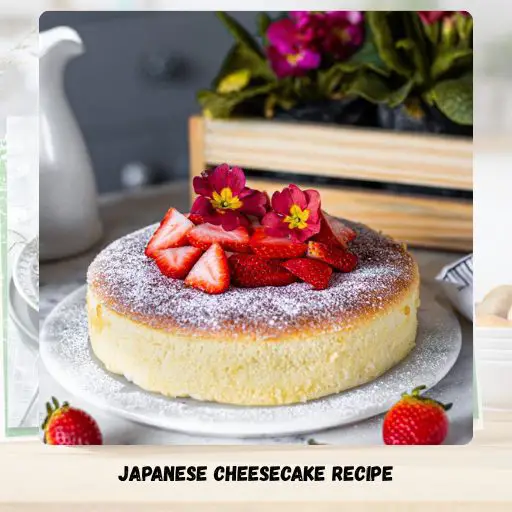
Distinguished by its jiggly, cotton-soft consistency, Japanese Cheesecake stands out from its denser Western counterparts by incorporating meringue into its batter. This ingenious addition serves as the key to achieving the cake’s iconic fluffiness and ethereal quality.
Whether you’re a seasoned baker or new to Japanese confections, this recipe is crafted to be user-friendly and foolproof, guaranteeing a flawless outcome each time. With just a handful of basic ingredients and a touch of patience, you’ll soon savor a decadent dessert that will astonish your loved ones.
Prepare to delve into the art of Japanese Cheesecake creation, a delightful journey that promises a special delight for any event or a lavish everyday treat. So, preheat your oven, gather your ingredients, and let’s embark on crafting this heavenly confection together.
ingredients
- 8 oz (225 g) cream cheese, softened
- 4 tbsp (60 g) unsalted butter
- ½ cup (120 ml) milk
- 6 large eggs, separated
- ½ cup (100 g) granulated sugar (for egg whites)
- ¼ cup (50 g) granulated sugar (for yolk mixture)
- ½ cup (60 g) cake flour (or sifted all-purpose flour)
- 2 tbsp (15 g) cornstarch
- 1 tsp lemon juice
- ¼ tsp cream of tartar (optional, for egg whites)
- Powdered sugar, for dusting (optional)
equipment
- Mixing bowls
- Hand mixer or stand mixer
- Springform pan
- Parchment paper
- Whisk
- Spatula
Instructions
- Preheat the oven to 320°F (160°C) and prepare an 8-inch springform pan by lining the bottom with parchment paper for easy removal later.
- Melt cream cheese, butter, and milk in a double boiler until smooth, then allow the mixture to cool slightly before proceeding to the next step.
- Combine the egg yolks with the melted mixture, sift in cake flour and cornstarch, and stir until a smooth batter forms with all ingredients well incorporated.
- In a separate bowl, whip the egg whites with cream of tartar until stiff peaks form, creating a glossy meringue that will add lightness to the cake.
- Gently fold the meringue into the cheese batter in three additions, ensuring a uniform texture without any visible white streaks for a fluffy consistency.
- Pour the batter into the prepared pan, tap it on the counter to release any air bubbles, and bake until the top turns golden and lightly springs back to the touch, typically taking around 1 hour.
tips & tricks
- Ensure all ingredients are at room temperature for a smoother batter.
- Be gentle when folding in the egg whites to maintain the cake’s airy texture.
- Avoid opening the oven door during baking to prevent the cake from collapsing.
- Let the cheesecake cool in the oven with the door slightly ajar to prevent cracking.
- Dust the finished cake with powdered sugar for a decorative touch.
fAQs about Japanese Cheesecake (Fluffy Style) Recipe
Q: How can I prevent my cheesecake from cracking?
A: To prevent cracking, make sure all ingredients are at room temperature, avoid overmixing the batter, and cool the cake gradually after baking.
Q: Can I use a different type of flour for this recipe?
A: Cake flour is recommended for its light texture, but you can substitute with all-purpose flour if needed. Just be mindful of potential texture differences.
Q: How long can I store the Japanese cheesecake?
A: Store the cheesecake in the refrigerator for up to 3 days, tightly wrapped in plastic wrap to maintain its moisture.
conclusion
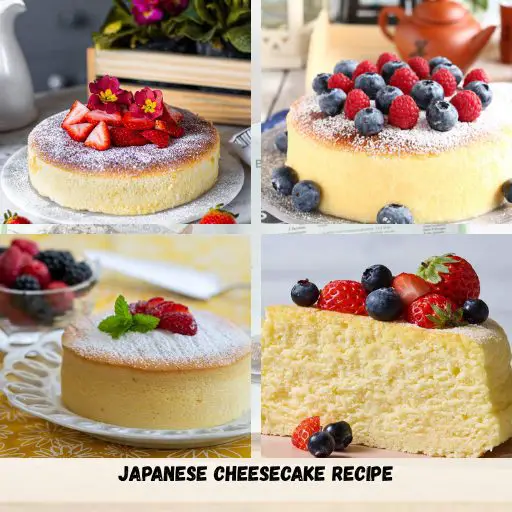
Japanese cheesecake, with its delicate and fluffy nature, offers a versatile dessert option that can be enjoyed in various settings. Whether served at special occasions or as a daily treat, this airy confection is bound to impress with its ethereal texture and subtle flavors. Experiment with different flavor profiles like adding lemon zest for a citrusy twist or serving it with fresh seasonal berries for a burst of natural sweetness.
When storing any leftovers, maintain the cake’s pillowy softness by refrigerating it and gently reheating in the microwave for a few seconds. To troubleshoot common issues, adjust the oven temperature if the cake is browning too quickly or ensure thorough cooling to prevent collapse. Japanese cheesecake is a delightful addition to your baking repertoire, offering a unique take on the traditional cheesecake that will leave a lasting impact on your guests and satisfy your dessert cravings.
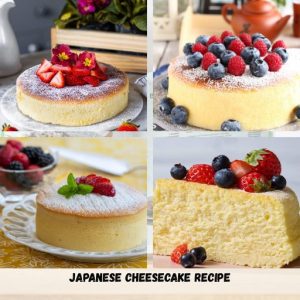
Japanese Cheesecake Recipe
Equipment
- Mixing Bowls
- Hand mixer or stand mixer
- Springform pan
- Parchment paper
- Whisk
- Spatula
Ingredients
- For the Cream Cheese Batter:
- 8 oz 225 g cream cheese, softened
- 4 tbsp 60 g unsalted butter
- ½ cup 120 ml milk
- 6 large eggs separated
- ½ cup 100 g granulated sugar (for egg whites)
- ¼ cup 50 g granulated sugar (for yolk mixture)
- ½ cup 60 g cake flour (or sifted all-purpose flour)
- 2 tbsp 15 g cornstarch
- 1 tsp lemon juice
- ¼ tsp cream of tartar optional, for egg whites
- Powdered sugar for dusting (optional)
Instructions
- Preheat the oven to 320°F (160°C) and prepare an 8-inch springform pan by lining the bottom with parchment paper for easy removal later.
- Melt cream cheese, butter, and milk in a double boiler until smooth, then allow the mixture to cool slightly before proceeding to the next step.
- Combine the egg yolks with the melted mixture, sift in cake flour and cornstarch, and stir until a smooth batter forms with all ingredients well incorporated.
- In a separate bowl, whip the egg whites with cream of tartar until stiff peaks form, creating a glossy meringue that will add lightness to the cake.
- Gently fold the meringue into the cheese batter in three additions, ensuring a uniform texture without any visible white streaks for a fluffy consistency.
- Pour the batter into the prepared pan, tap it on the counter to release any air bubbles, and bake until the top turns golden and lightly springs back to the touch, typically taking around 1 hour.
Video
Notes
Be gentle when folding in the egg whites to maintain the cake’s airy texture.
Avoid opening the oven door during baking to prevent the cake from collapsing.
Let the cheesecake cool in the oven with the door slightly ajar to prevent cracking.
Dust the finished cake with powdered sugar for a decorative touch.